


How to Protect a Travel Trailer for Winter?
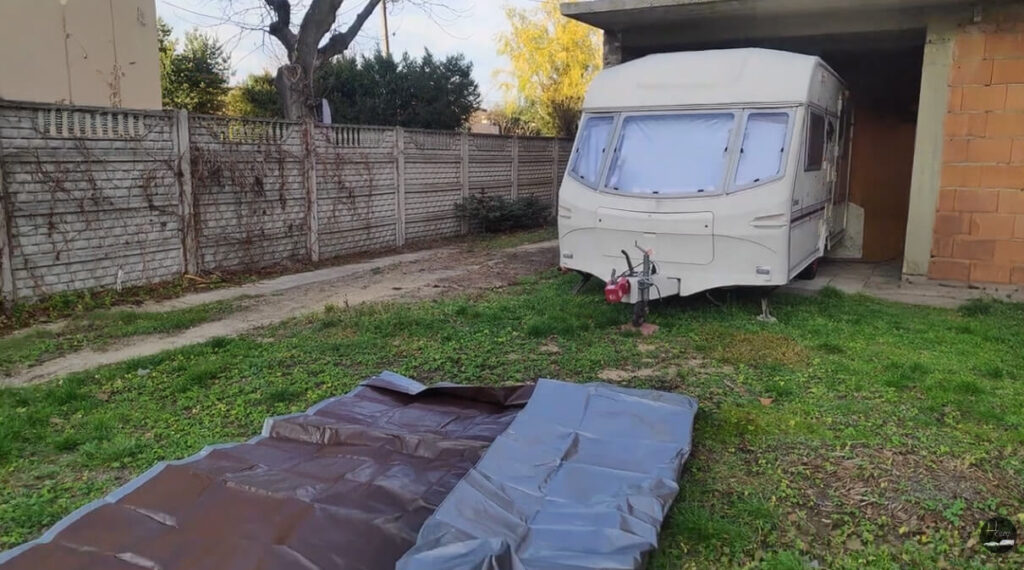
Proper winterizing of a travel trailer is a crucial step that determines its technical condition for the next season. Most camping enthusiasts leave their trailers for a winter rest, which is why it's worth taking care of their proper protection beforehand to avoid the effects of frost and moisture.
Preparing the trailer for winter requires a few simple but very important steps. Here are the most crucial actions that will help you avoid costly repairs and losses. Proper preparation of the trailer for winter is not just a matter of aesthetics, but above all, the safety and longevity of the vehicle. Frost, moisture, and lack of ventilation can cause corrosion, leaks, and unpleasant odors inside within a few months. It is therefore worth dedicating one day in autumn to secure the trailer and start the new season calmly, without stress or unplanned repairs.
Winterizing a Travel Trailer
1. Storing the Trailer Under a Shelter/Carport
One of the most effective ways to protect a travel trailer for winter is to keep it under a carport or in a garage/shed. By keeping the trailer in a dry and sheltered place, you avoid the direct effects of snow, rain, and frost on the vehicle's structure and external components, with the windows being particularly sensitive here.
2. Purchasing a Dedicated Cover
If you are unable to store the trailer in a shed or a garage, it is worth considering purchasing a dedicated protective cover. Such covers are specifically designed to protect the travel trailer from weather conditions while ensuring breathability and UV resistance. When choosing a cover, make sure it is the correct size and made of a durable material that will provide protection throughout the winter.
A dedicated cover for a travel trailer is an investment for years. Models from reputable manufacturers (e.g., Hindermann, Brunner, Outwell) have a breathable layer and a UV-protective coating. It is worth choosing covers that have fastening straps underneath the trailer—these prevent the cover from being lifted by strong winds.
3. Pre-Winter Inspection and Maintenance
Before winterizing the trailer, it is worth conducting a thorough inspection and maintenance. Check the condition of the tires, the jockey wheel, the handbrake, the electrical installation (especially if you have solar panels, for example), and the gas installation, as well as the seals on windows and doors. Remember to remove the battery. Perform any necessary repairs and maintenance to avoid potential problems during the next camping season. Additionally, protect metal components from corrosion using appropriate anti-corrosion preparations.
It is also a good practice to lubricate door hinges and locks with a silicone technical agent, which protects against freezing and jamming. If the trailer has acrylic windows, wash them with a gentle, alcohol-free agent to avoid micro-cracks during frost.
4. Proper Storage of Equipment
When securing the trailer for winter, do not forget about its equipment. Remove all food, cosmetics, and other items susceptible to freezing to avoid spoilage or damage. Wash and dry mattresses, blankets, and pillows, and then store them in a dry place to maintain their freshness and durability.
5. Securing the Interior and Ventilation
In winter, the interior of the trailer is exposed to moisture and unpleasant odors. Leave the ventilation grilles slightly open to allow air circulation. Moisture absorbers also work well—preferably those with a replaceable cartridge, which you can buy at a DIY store.
It is also worth leaving cabinet doors ajar so that air can reach all nooks and crannies. If you have a refrigerator—wash it thoroughly, dry it, and leave it open.
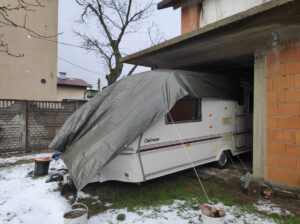
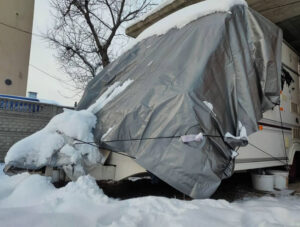
Cover for a Travel Trailer
The use of a special breathable cover for a travel trailer offers many benefits that are worth considering:
Protection against Moisture: Breathable covers are designed to allow air to pass through while simultaneously protecting the trailer from moisture. This prevents water vapor from condensing under the cover, which can lead to mold, rust, and other moisture-related problems.
Preventing Condensation: Thanks to their breathable properties, the covers allow for free air circulation, which reduces the risk of condensation under the cover. Condensation can lead to the formation of moisture and fogging, which can negatively affect the condition of the trailer and its equipment.
Maintaining Freshness: Breathable covers allow for the natural wicking away of moisture and water vapor, which helps maintain freshness inside the trailer. This helps you avoid unpleasant odors and the buildup of dampness that can lead to the development of mold and mildew inside.
Perfect Fit for the Trailer: Purchasing a special cover ensures a perfect fit, as you provide the exact dimensions of your trailer when ordering the cover. Additionally, these dedicated covers have a door opening, allowing you to enter the trailer without having to remove the cover. This particularly solves the problem of forgetting something inside the trailer when it's the middle of winter and the trailer is already covered in snow. With a dedicated cover, you can simply open the door, thanks to the cutout secured with zippers.
Cover for a Travel Trailer
The best solution is a breathable cover for a travel trailer, which protects against moisture while allowing air circulation and preventing mold growth. In the video below, you will see that initially, we used ordinary tarpaulins, trying to secure the windows with foil and the roof with styrofoam. After 3 winters, we decided on a dedicated, custom-sized cover.
MOST FREQUENTLY ASKED QUESTIONS
The optimal time is the turn of September and October, before the temperature drops below zero and before moisture appears. This ensures all components have time to dry after the season.
Yes, the trailer can be winterized outside if it is properly secured. However, it should be placed on a hardened surface, tilted slightly so that water does not collect on the roof. It is mandatory to use a breathable cover and protect the wheels from UV rays.
The best way is to ensure good ventilation and use moisture absorbers. Do not cover the trailer with non-breathable foil, as this will lead to condensation and mold. It is also advisable to leave the ventilation grilles slightly open and cabinet doors ajar.
Yes, this is an absolute necessity. Water in tanks, the boiler, or pipes can freeze and burst the components of the installation. It is best to empty everything and blow air through the system with compressed air, especially if the trailer is stored in an unheated location.
It is best to remove the battery and store it in a warm, dry place. It is worth recharging it once a month to avoid deep discharge. If it remains in the trailer, disconnect the terminals and regularly check the voltage.
Yes, this is an important element of maintenance. Window and door seals should be wiped with a silicone or glycerin-based product, which prevents them from freezing and cracking. Hinges and locks can be protected with technical grease in a spray.
Place the trailer on dry, non-flood-prone ground, preferably on pads so that the wheels do not touch the ground. Disconnect electricity and gas, and secure ventilation ducts with mesh against rodents. A good breathable cover is sufficient to safely survive the winter.
Check out our most popular articles
Popular Searches: RV winterization guide, winterizing a travel trailer, how to prep a travel trailer for winter, RV winter storage tips, breathable RV cover, best dehumidifier for RV storage, how to store a camper outside in winter, motorhome winterization, protecting RV pipes from freezing, winter care guide for travel trailers